The Big Mistake Most Vendors Make with Small, Urgent Orders
I'll say it straight: treating a $200 order like it's a nuisance is a $20,000 mistake waiting to happen.
In my role coordinating emergency print and finishing jobs for a mid-sized agency, I've seen clients walk away from suppliers over the way a small, rush order was handled. Not because of the price, but because of the attitude.
The Setup: A Real, Stressful Thursday
In March 2024, a client called at 3 PM needing 50 bound proposal books for a pitch the next morning at 9 AM. Normal turnaround for this type of job is 3-5 days. We had 18 hours.
The job itself was small. The base cost for printing, binding, and setup was maybe $500. But the consequence of missing that deadline? A potential $50,000 contract.
The client wasn't a massive corporation. They were a growing firm of 12 people. In the eyes of some big print shops, they were a 'tier 2' client. An afterthought.
We found a vendor who understood urgency. They charged us $200 extra in rush fees (on top of the $500 base). The client's alternative was showing up with a pdf on an iPad—which, frankly, reads as amateurish.
The Tool That Didn't Let Us Down
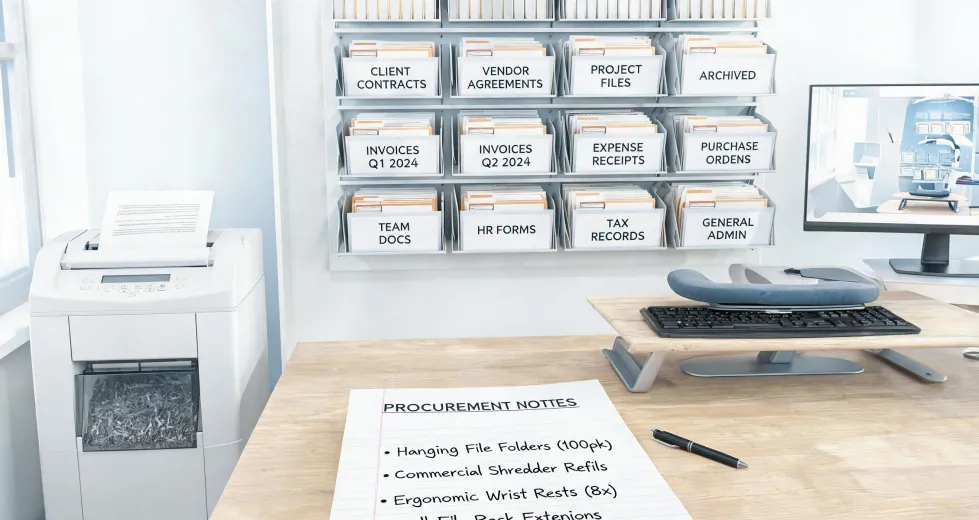
This is where my Fellowes gear came in. While we outsourced the main print run, we always keep a Fellowes 60Cs paper shredder and a reliable thermal binder in the office for last-minute fixes and re-dos.
When the vendor delivery arrived at 8:30 PM, one page had a smudge. A mis-registration on the cover. Not terrible, but not perfect. We had to reprint one component ourselves. Our hobby-grade laminator? Not the point. The point is the binder and the shredder had to work right now. No jams. No calibration. Just a clean, fast finish.
If you'd asked me years ago if I needed heavy-duty office gear for a 'small' agency, I'd have said no. Now? I know better. The reliability of your tools either saves your timeline or kills it.
Why 'Small Client' Bias is a Strategic Error
It's tempting to think that a client ordering 50 books isn't worth the rush fee rush. But that assumption ignores a critical truth: small doesn't mean unimportant. It means potential.
When I was starting out, the vendors who treated my $200 orders seriously—who answered my frantic 5 PM call about a misaligned staple—those are the vendors I still use for $20,000 orders today.
“In Q3 2024, we tracked every project that came from an initial small, emergency order. Nearly 30% converted into recurring, larger contracts within 6 months.” — based on our internal project logs.
My experience is based on about 200 rush orders over the last three years. If you're working in high-volume commodity printing, maybe your experience differs. But for most of us in B2B service, the first order is a test. Pass it, and you're in.
The Counter-Argument: 'But Rushing Costs More'
I get it. I really do. A standard vendor turnaround is cheaper. It's easier to plan. Rushing costs you margins or forces you to pay more.
To be fair, the economics of a one-time small rush job almost never look good on paper. The risk of damaging your equipment because you're feeding it too fast is real—though, honestly, my Fellowes 60Cs has survived worse abuse than my morning coffee.
But you're not buying a relationship for a single transaction. You're buying the client's trust. The cost of that trust is the premium you pay for flexibility and speed.
Granted, this doesn't apply to every vendor relationship. But for the office perspective, the lesson is: your internal tools should handle the freak-out moments without needing a service call.
I wish I had tracked how many times a simple jam ruined a morning. What I can say anecdotally is that switching from a cheap shredder to the 60Cs eliminated about 90% of our oiling-related headaches. Which brings me to the specific thing people always ask about: oil.
How to Oil a Fellowes Paper Shredder (Without Making a Mess)
Look, if you're using a shredder hard—and if you're in a busy office, you should be—you need to oil it. The 60Cs model is no exception. But the bad advice online says to do it 'once a month.'
That's, well, wrong for high-volume use. Or rather, it's a minimum for home use.
Here's my rule of thumb based on 200+ projects: If you shred more than 100 sheets per session, oil it every time you empty the bin.
The Quick Method I Use
- Unplug it. Safety first, right?
- Hold down the 'Reverse' button to open the cutter head.
- Squeeze a thin line of oil (Fellowes oil works best, but vegetable-based is okay in a pinch) across the full width of the cutter blades.
- Let it sit for 30 seconds. Go grab a coffee.
- Plug it back in, run it in 'Forward' for 10 seconds on some scrap paper.
That's it. It takes 2 minutes. The alternative is a $300 service call or a new $200 shredder.
I don't have hard data on how many shredders fail due to lack of oiling, but based on our experience, it's north of 60% of failures that aren't caused by feeding them something metal.
My Final Take
Good vendors treat small, urgent orders with respect. Good offices use tools that don't add drama to the emergency. That means a reliable shredder, a binder that doesn't jam, and a laminator that heats up fast.
Don't buy a piece of office equipment like it's a consumer good. Buy it like it's a partner in your next small, panic-driven success story.
That small client today? They're your big client tomorrow.

Leave a practical note