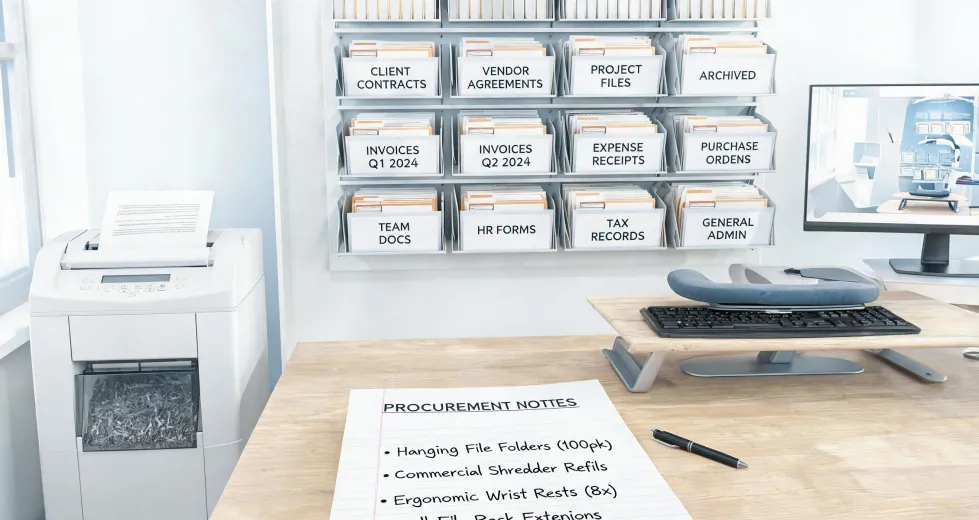
It was a Tuesday. I remember because Tuesdays are already my busiest day—payroll approvals land on my desk, the weekly vendor call is at 10 AM, and someone always, always has a printer jam. But this particular Tuesday, the chaos arrived all at once in the form of Sarah from accounting, a stack of shredded paper clutched to her chest like a fallen soldier.
“The shredder’s dead,” she said. “It made this noise.” She imitated something between a dying robot and a coffee grinder. “And now it won’t turn on.”
I sighed. It was a Fellowes shredder, a sturdy 10-sheet cross-cut model we’d had for maybe three years. In my infinite wisdom (seriously, what was I thinking?), I decided to handle it myself. “I’ll take a look,” I said. “Probably just a jam or a safety switch.”
Spoiler: it was neither.
The Beginning of My ‘Office Fix-It’ Era
For context, when I took over purchasing in 2021, I had a bad habit of trying to be the office hero. I thought handling everything myself—from fellowes paper shredder repair to figuring out how to scan a document from printer to computer for the third time that week—would make me look indispensable. I was wrong. It just made me look busy and, eventually, wrong.
That Tuesday, I spent 45 minutes with a flashlight, a screwdriver (which I borrowed from IT, ugh), and a growing sense of dread. I Googled “fellowes paper shredder repair” and found a forum post from 2017 suggesting I try resetting the motor. I tried. Nada. I took the head off—bad idea. Plastic bits fell out. (Should mention: I am not a repair person. I am an admin buyer. Knowing my limits would have saved us $200.)
I finally admitted defeat and called our local office supply vendor. They sent a repair technician two days later. Diagnosis? The motor had burned out. Cost of the repair estimate? $180. Cost of a brand new Fellowes shredder, which I could have ordered with next-day delivery? $250. I had essentially paid $180 to learn a lesson I should have already known.
“The vendor who said ‘this isn’t our strength—here’s who does it better’ earned my trust for everything else.”
The Office Equipment Domino Effect
My misguided heroism didn’t stop at the shredder. Later that month, we needed to outfit a new workstation. We had a desk, but the user (a new project manager) needed a keyboard tray. I found a fellowes office suites underdesk keyboard drawer on a distributor site—looked fine, decent price, in stock. But instead of ordering it, I decided to check if we had one lying around in storage first. (Oh, and I also needed a chest binder for some client documentation, but that’s another story.)
After 30 minutes of digging through our supply closet, I found an old, generic keyboard tray. It was the wrong size for the desk. The mounting brackets didn’t fit. I wasted an hour and still had to order the fellowes one anyway. The new hire got her setup a day late because of me.
Here’s the thing: I was trying to save a few bucks and a few days. What I actually did was create a delay and look less organized than if I’d just ordered the right thing from the start. The Fellowes underdesk keyboard drawer is a good product—I know that now. It installs in minutes, it swivels, it’s got a wrist rest. But I learned that my job isn’t to hoard components or MacGyver solutions. It’s to connect the right product to the right person, fast.
The Turning Point: Scanning and the Ergonomic Chair Paradox
The real turning point came a few weeks later. Our HR director asked me for advice on office chairs. We had a budget from operations to order 20 new chairs for a floor renovation. I started researching. I looked at ratings, warranty terms, adjustability. I even considered trying to assemble a few myself to save on labor costs. (Looking back, I should have just hired the vendor’s assembly team. At the time, I thought I was being proactive. I wasn’t.)
I ended up calling a specialist ergonomic dealer. I told him my budget and my needs. He gave me three options, all with free trial periods. He also said, very honestly: “Your team might also benefit from the fellowes office suites underdesk keyboard drawer to go with the chairs—it forces better arm posture. But if you’re buying cheaper chairs without armrest adjustment, the tray won’t help as much.” He knew his limits. He wasn’t trying to sell me the tray if the chairs were wrong.
I bought the chairs from him. I bought the keyboard trays separately. Everything worked. I didn’t have to scan a single manual from the printer to my computer to figure it out—the vendor did the heavy lifting. I saved about 6 hours that week. (Actually, it was more like 10, if you count the time I didn’t spend on YouTube watching how to scan a document from printer to computer tutorials.)
What I Learned: Professional Boundaries Are a Superpower
A year later, our facilities manager asked me to help compare chest binder options for archive storage. I smiled and said, “Great question. I’d check with a dedicated filing supplier. My wheelhouse is more around the active equipment—desks, chairs, shredders, laminators.” I was stating my boundary, and it felt good. It felt professional.
Here’s my honest takeaway: a good admin buyer doesn’t know everything. A great one knows who to ask. I’d rather work with a specialist who knows their limits than a generalist who overpromises. That’s why I trust brands like Fellowes for what they’re good at—secure shredding, solid ergonomic accessories, durable finishing equipment. I don’t expect them to make my coffee or fix my HVAC.
Practical Lessons From This Chaos
- Don’t attempt professional repairs on office equipment. The cost of your time plus the risk of breaking it further almost never beats the warranty or replacement cost. If you need fellowes paper shredder repair, call an authorized service center, not YouTube.
- Standardize your ergonomic accessories. The fellowes office suites underdesk keyboard drawer is a great choice for consistency. Order the same model for every new desk. Don’t let well-meaning staff install random trays from storage—it creates a maintenance nightmare.
- Use the right tool for the job. Just like you wouldn’t use a chest binder as a replacement for an office chair (please don’t), don’t use your admin time to fix a printer issue you can solve with a 30-second Google search. Bookmark a guide on how to scan a document from printer to computer and share it with the team. Delegate the knowledge.
- When buying office chairs, test before you commit. Let your colleagues sit in them for a week. A $600 chair that nobody likes is a $600 mistake. Pair it with a good keyboard tray for real ergonomic benefits.
Final Thought
That broken shredder cost me $180 out of my department’s budget. But the real cost was the lesson I should have learned earlier: pretending you can do everything is a recipe for doing nothing well. Now, when I see a problem, I ask myself: is this in my lane? If it is, I handle it with the right vendor. If it isn’t, I hand it off. My team gets better service, and I get to sleep at night. (And I buy a new Fellowes shredder with the money I saved from not fixing the old one.)

Leave a practical note