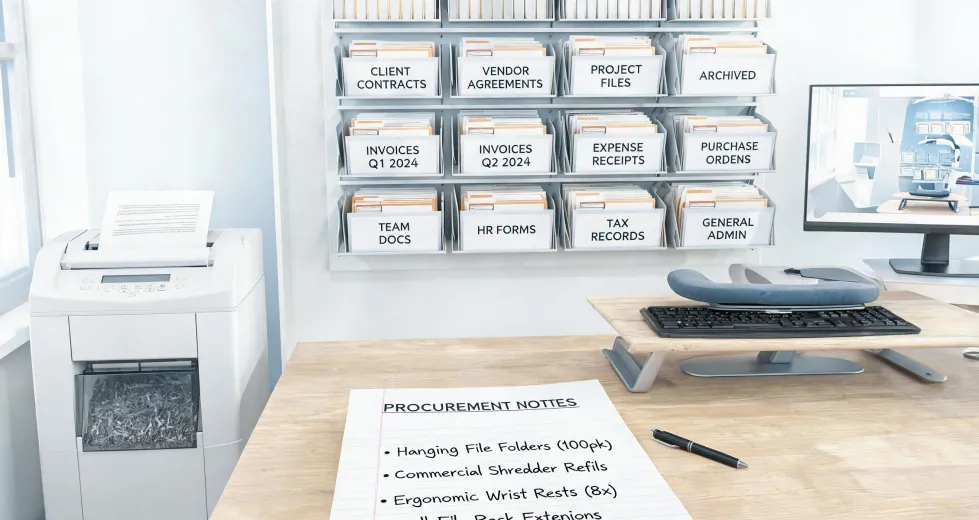
It was a Tuesday morning in September 2024 when the Fellowes W11C paper shredder in our breakroom started making that awful grinding sound. Not the smooth hum I’d gotten used to—more like a rusty gate. I knew exactly what it meant: time to oil the blades. And let me be honest, I’d put it off for months. That morning, though, the machine finally forced my hand. By 9:30, it was completely jammed. So began a day that taught me more about office maintenance—and my own habits—than I expected.
The Shredder Oil Saga
If you’ve ever owned a Fellowes shredder, you know the manual says to oil it every time you empty the bin, or after about 30 minutes of continuous use. I’d been skipping that—because who has time? The W11C is a workhorse, cross‑cut, handles up to 11 sheets at a time. When it’s happy, it chews through confidential documents like a champ. But when it’s dry, it jams. That Tuesday, after feeding it a stack of old invoices, it seized up with a sickening clunk.
I grabbed the bottle of Fellowes Shredder Oil from the supply closet (the stuff is specifically designed for Fellowes machines; don’t use cooking oil—learned that the hard way a few years ago). The process itself is simple: unplug the shredder, squeeze a zig‑zag pattern across the paper entry, let it sit for a couple of minutes, then run it in reverse for 10 seconds, then forward for 10 seconds. I even found a handy video from Fellowes support that walks through the steps. After that, the W11C was back to its quiet self. But the whole ordeal took me 45 minutes of troubleshooting—time I could have saved if I’d just oiled it two weeks earlier.
That experience cemented something: equipment maintenance directly affects the professional image you project. When finance walked by and saw me wrestling with a jammed shredder, they didn’t see “bad luck”—they saw a disorganized office. A well‑maintained machine, on the other hand, signals that we take document security and reliability seriously. That’s the core of the “quality equals brand perception” lesson I keep coming back to.
Printer to Mac: A Quick Rescue
No sooner had I wiped the oil off my hands than my colleague Maria from accounting popped her head in. “My Mac won’t print to the new HP LaserJet. Can you help?” I’m no IT specialist—I’m a procurement coordinator—but I’ve added a printer to a Mac more times than I can count. Here’s what I told her, in case it saves you time:
- Make sure the printer is on the same Wi‑Fi network as your Mac.
- Go to System Settings → Printers & Scanners.
- Click the “+” button; your printer should appear automatically via Bonjour.
- If not, click “Add Other” and enter the printer’s IP address.
- Once added, set it as default if needed.
The whole thing took six minutes. Maria was impressed. I felt like a hero—until the next problem hit.
The Water Wake‑Up Call
By lunch, I had a headache. I realized I hadn’t drunk anything all morning. I pulled out my phone and searched “how much water to drink a day calculator.” There are dozens of them online—just plug in your weight, activity level, and the calculator spits out a target. For me (180 lbs, desk job, light exercise), the number was about 3 liters. I’d had maybe half a cup of coffee. I filled a 1‑liter bottle and set a reminder on my watch. Honestly, using that calculator was a game‑changer—it made me aware of a habit I’d been ignoring. My afternoon energy was noticeably better.
A Surprise from Finance: Savings Bond Calculator
At 3 PM, our CFO Dave emailed me: “We need to update the savings bond values in the quarterly report. Can you check the current rates?” I’m not a financial analyst—I manage office supplies—but I knew exactly where to look. The TreasuryDirect.gov website has an official savings bond calculator. I plugged in the bond serial numbers and printed the updated values. Dave was relieved. That little calculator saved him from digging through old paperwork.
What I Learned That Day
Looking back, that Tuesday was a microcosm of office life: a series of small, unrelated challenges that, if handled well, make the whole operation look seamless. The shredder oil—a $10 bottle that lasts six months—prevented a $200 repair. The printer setup kept accounting on schedule. The water calculator reminded me that personal health is part of professional performance. And the savings bond calculator? Finance still thinks I’m a wizard.
Here’s the bottom line: quality isn’t just about the products you buy—it’s about how you maintain and use them. A Fellowes shredder that’s properly oiled not only lasts longer, it projects an image of care and reliability to everyone who walks by. The same goes for your hydration habits and your ability to find the right tool for the job. Trust me on this one: investing a few minutes in the little things pays off in ways you don’t expect.
“I’m not a logistics expert, so I can’t speak to carrier optimization. What I can tell you from a procurement perspective is that routine maintenance is a no‑brainer—it protects your brand image and your budget.”
If you’ve ever had a shredder jam at the worst possible moment, you know that sinking feeling. But with the right oil, a little patience, and a few calculators in your back pocket, you can turn a frustrating day into one that actually teaches you something useful. (Though I should note: my experience is with offices of about 60 people; your mileage may vary.)
Now, if you’ll excuse me, I’m going to oil the shredder—before it reminds me again.

Leave a practical note